
Government Should Experiment with Eliminating Patient Barriers, Not with Covering Ozempic
by Akiva Malamet, Bautista Vivanco, and Michael F. Cannon, Cato at Liberty, August 11, 2025.
Excerpts:
While Ozempic and other GLP‑1 drugs are great at helping patients lose weight(among many other promising uses), these impressive medications come with an impressive price tag. For those paying out of pocket, a month’s supply can cost around $1,000.
Congress prohibits Medicare from subsidizing anti-obesity medications but allows GLP‑1 drugs for the treatment of diabetes and cardiovascular disease (a particularly vulnerable subset of its beneficiary population). The Congressional Budget Office studied the budgetary impact of authorizing Medicare to subsidize anti-obesity medications. It concluded that subsidizing GLP‑1 drugs for obesity would have a net cost to taxpayers of $31.5 billion between 2026 and 2034.
And:
More recently, our colleague Jeffrey Singer argued that Congress can and should eliminate FDA barriers for compounding pharmacies. Singer also emphasized the benefits of removing prescription requirements. Combined, these reforms would significantly increase competition and render GLP-1s more accessible.
In a competitive market, price-sensitive patients put downward pressure on the prices of the medical goods and services they need or want. Medicare, Medicaid, and the tax exclusion for employer-sponsored health insurance create multiple levels of separation between patients and the price of medical goods and services. The more insensitive patients are to the price of care, the less pressure they put on providers to reduce prices. This makes health care more expensive and less accessible for everyone.
Employer-Sponsored Green Card Processing Takes 3.4 Years, All-Time High
by David J. Bier, Cato at Liberty, August 11, 2025.
Excerpt:
Immigrant workers seeking a green card—which denotes legal permanent residence in the United States—now face almost a three-and-a-half-year wait to make it through the government’s regulatory morass. Paying a $2,805 fee could reduce this wait to “only” 2.8 years. Since 2016, the government has added over 18 months to the average green card process. This needs to change to keep America competitive.
The processing delays come on top of the time to wait for a green card cap slot to become available under the annual green card caps (which is often many years). They also don’t include the time spent complying with regulations prior to the first filing step. This prefiling period can take months.
DRH comment: I’m so glad I got my green card in 1977, when it took only a few months.
The Price of Pragmatism: How the Court’s Retreat from the Constitution Fueled Mass Incarceration
by Mike Fox, Cato at Liberty, August 11, 2025.
Excerpt:
NYU Law Professor Rachel Barkow has written an extraordinary new book, Justice Abandoned: How the Supreme Court Ignored the Constitution and Enabled Mass Incarceration. It is a damning indictment of our judicial system’s complicity in the dramatic expansion of incarceration over the past several decades. Judge-made changes in the law have created a new status quo: The United States—with five percent of the world’s population—now contains 25 percent of its prisoners.
Barkow’s central thesis is that the Supreme Court has failed to execute its core function: to safeguard individual liberties against the encroaching power of the state. Even worse, it has cloaked this failure in the guise of public safety. As Barkow explains, the Court has refused to “police the police.” When supervision of government fails, egregious abuses of authority go unchecked. The Court’s failure to enforce constitutional guarantees has enabled mass incarceration to metastasize.
DRH Note: I didn’t notice until I started posting, but 3 out of 3 of my weekly highlights are from one source: Cato at Liberty. Good for them. So would be the 4th, so I’ll refrain from posting it and, instead, post a link to an excellent forum held by the Independent Institute.
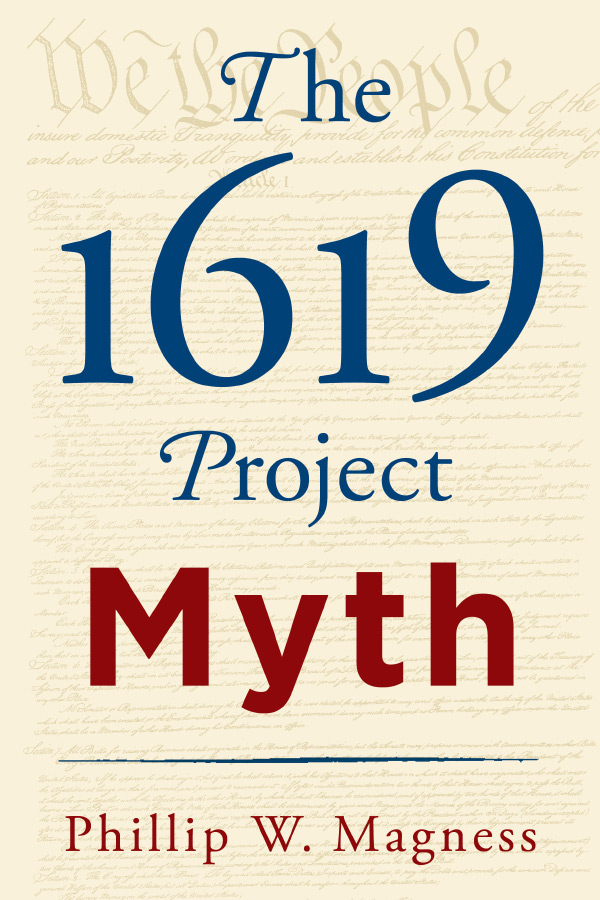
What If Everything You’ve Heard about the 1619 Project Is Wrong?
by Jeff Hummel and Phil Magness, Independent Institute, August 13, 2025.
Jeff does an excellent job of questioning and Phil knocks it out of the park with his answers. Truly amazing how low the New York Times sunk.
I recommend listening at 1.25 speed. You won’t miss much by skipping Q&A, which starts at about the 42:00 point, although there is an interesting question (and an informative answer) about how Abe Lincoln thought of getting slaves to emigrate.
Even if you have little time to listen, check out the story of the New York Times fact checker at 15:14.
My favorite line, though, which gave me goosebumps, is at 12:34.
READER COMMENTS
Alan Goldhammer
Aug 18 2025 at 8:28am
Compounding pharmacies are not the answer to the GLP-1 drug problem. The current drugs are all injectables an require sterile processing facilities and expertise. There have been documented instances of patient harm from products from this source. In addition, Novo-Nodisk and Lilly, the two manufacturers of the drugs, will litigate and likely succeed to keep such products off the market.
nobody.really
Aug 18 2025 at 3:55pm
I heard that the pill versions of these drugs–Semaglutide (“Rybelsus) and Tirzepatide (“Mounjaro” and “Zepbound”)– are less effective, but cheaper to manufacture, ship, and store.
Alan Goldhammer
Aug 18 2025 at 8:45am
I never saw the need to read any of the 1619 Project. It likely was designed as a polemic (nothing wrong with that). I watched the first 20 minutes of the video discussion and it appeared that what was going on was a lot of nitpicking rather than assessing the “original sin of slavery.” Readers would be far better served by reading Jill Lepore excellent history of our Republic “These Truths: A History of the United States.” She discusses all of the relevant issues as they evolved. Slavery was put into the original Constitution and defended vehemently and violently to the end of the Civil War (though the argument could be made that remnants continued to exist until the Civil Rights legislation of the 1960s). Those facts cannot be papered over and discussion of the 1619 project is just a waste of time (IMO obviously).
steve
Aug 18 2025 at 12:07pm
I think it was the wrong thing to focus on and it was poorly done. It was also bad timing. I think a lot of Americans are tired of the slavery/Jim Crow narrative. They have decided that not only should we not try to make any efforts to address the harms done by hundreds of years of mistreatment but that those efforts have all been wrong and are actually bias against the group which inflicted the initial harms. The claim is made, correctly, that they didnt own slaves or pass the Jim Crow laws.
As a general principle in law the party that inflicts harm on another must make the harmed party whole and/or suffer some punishment. That is clearly out the door now and it is made more difficult as while nearly an entire group of the minority was harmed, a smaller group among the majority directly benefited. A much larger group among the larger group indirectly benefited but those benefits were not very visible.
Anyway, it’s probably just time to move on.
Steve
David Henderson
Aug 18 2025 at 9:37am
You write:
There’s nothing wrong with a polemic. There’s lots wrong with telling untruths.
Bill Conerly
Aug 18 2025 at 4:11pm
Thanks for reminding us about Cato at Liberty. What are your other go-to blogs or Substacks?
Monte
Aug 19 2025 at 11:57pm
The editorial staff at the NY Times (Jake Silverstein and Matt Desmond) are more to blame for feeding us this purgative (The 1619 Project) than Nicole Hannah-Jones, which amounts to little more than a call for reparations.
Comments are closed.