

The philosopher Daniel Dennett passed away recently. While his work was focused on things like consciousness and the philosophy of mind, his ideas can find applications in other areas of life, including economics. There’s one idea in particular he described in his book Intuition Pumps and Other Tools for Thinking I want to highlight here – what Dennett calls a “deepity.”
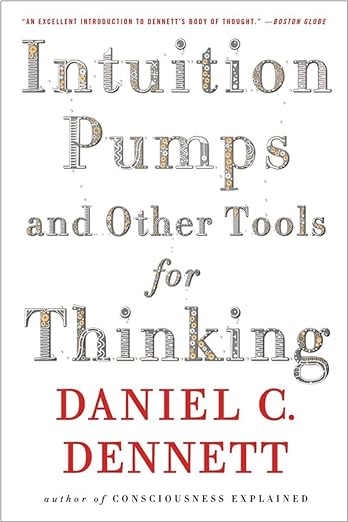
Dennett describes a “deepity” as a seemingly meaningful comment that is actually marred by ambiguity. There are two different ways to interpret the statement. On one interpretation, it makes a meaningful and substantive claim, but that claim is outright false. On another interpretation, the claim is true, but only trivially true.
This has some similarities with the “motte-and-bailey” fallacy Scott Alexander has described before:
Both ideas are similar in that they refer to claims that oscillate between interpretations, but there are a few differences. In the motte-and-bailey, it’s not necessarily the case that the bold statement is false – it’s just that the bold claim actually being advanced isn’t being defended. Motte-and-bailey is a sneaky argumentative tactic to bypass defending a claim. A deepity, as Dennett described it, is more akin to a trick you can play on yourself. Deepities can trip up our thinking when we unknowingly transfer the truth value of the trivial interpretation over to the substantive interpretation.
That said, here are two examples of deepities in economics one often finds. The first is the idea that imports reduce GDP, and the second is the idea that price increases are a result of greed.
For the first example, I’m actually being generous in allowing there’s a sense in which this claim can even be trivially true. It’s only in what Pierre Lemieux has called “a narrow bean-counting sense” – if we look at the accounting identity for GDP, we see that GDP = G + C + I + X – M. That is, GDP is equal to government spending, plus consumption spending, plus investment spending, plus exports, minus imports. While exports are an addition to GDP, imports are subtracted from GDP, therefore doesn’t that just obviously mean imports reduce GDP?
Well, no. While I’ve complained on more than one occasion that many economic misunderstandings come about because economists are just bad at naming concepts (public goods!), in this case I have to acquit the profession of that charge. What GDP conveys is right there in the name – gross domestic product. That is, it’s a measure of things that were – wait for it – produced domestically. Imports, by definition, are things that are not produced domestically. While it’s trivially true that imports are subtracted from the GDP accounting identity, that’s because what GDP measures, by definition, excludes imports. The subtraction occurs to prevent double counting. Recently, I spent $5 on some avocadoes that were imported from Mexico. That $5 would appear in the C portion of the above identity – it was $5 of consumption. But since the avocadoes were not produced domestically, that $5 is subtracted from the GDP calculation as M. That doesn’t mean GDP was “reduced” by $5 in any meaningful sense. It means this $5 in consumption wasn’t part of GDP as defined.
The substantive claim being made by the “imports reduce GDP” crowd is the idea that Americans would have a higher standard of living if we exported more and imported less. But this is outright false. Exports (again, by definition) are things American workers spend time, money, and resources producing and foreigners get the benefit of consuming. Consumption is a benefit, and production is the cost of acquiring that benefit. (Indeed, as Adam Smith wisely said, “consumption is the sole end and purpose of all production.”) Exports are what the citizens of a nation go through the cost of producing but don’t get the benefit of consuming. Because exports are produced domestically (by definition) they are part of GDP, but that’s very different from saying more exports and fewer imports would improve living standards or make citizens wealthier in any meaningful way. Another way to show this is to rearrange the GDP accounting identity. Say you want to live in a society where the citizens benefit from high levels of consumption and investment. You get C + I = GDP – G – X + M. That is, lots of exports and few imports means low levels of consumption and investment, and lots of imports and few exports means high levels of consumption and investment.
The second deepity, that greed explains price increases, can be interpreted in a way that is trivially true. Producers want to make as much money as they can and will therefore prefer to sell at higher prices in order to make more money. But this claim is often trotted out to explain things like price spikes, and in this more substantive context, the claim is clearly false. A desire to make more money rather than less is a constant. Price changes are a variable. Explaining a change in outcome by appealing to factors that have remained the same is an explanatory dead end. As an example, not long ago eggs sharply increased in price in the United States. Does “greed” explain this price increase? Trivially yes, but substantively no. If egg producers used to sell eggs for $3 per dozen and then raise the price to $6 per dozen, how does “greed” explain the change? If greed is the reason to sell at $6 per dozen, then why were they ever selling at $3 per dozen to begin with? Were egg producers altruistically motivated in the previous era, then suddenly all simultaneously got greedier, before all suddenly becoming less greedy again? The economist Justin Wolfers once tweeted out a rather striking graph of egg prices:

The same reasoning that says the massive spike in prices toward the end of the graph is explained by “greed” would, if applied consistently, also imply that the precipitous decline taking place shortly thereafter is explained by a massive decrease in greed. Or, instead of trying to explain changes by appealing to the unchanged, we could try to explain changes by appealing to other factors that also changed. Such as, say, changes in the supply-and-demand situation brought about by the spreading of an avian disease that substantially reduced the egg supply in the short term.
Those are two common examples of economic deepities. If there are some you can think of, dear reader, do by all means share them in the comments!
READER COMMENTS
MarkW
Jun 5 2024 at 12:51pm
When I’ve engaged with proponents of ‘greedflation’ theory, they will admit that what changed is not the ‘corporate greed’ grew larger, but rather than greedy corporations started taking advantage of special circumstances to run up prices. In their view, it is the never-ending job of governments to keep greed within bounds but sometime special circumstances happen (e.g. a pandemic) that let greedy businessmen jump over the normal governmental guardrails. Their argument is something along the lines of — inflation is always and everywhere a phenomenon drive by greed becoming ‘unfettered’, and the point of a term like ‘greedflation’ is to remind people of the eternal battle to control greedy, selfish rich people. (Of course, it is also used as a way to try to deflect blame away from the current inhabitant of the Whitehouse leading up to an election).
Richard W Fulmer
Jun 5 2024 at 2:16pm
I suppose that any monocausal explanation for a complex phenomenon could be considered a “deepity.” Consider, for example, the oft-made claim that repealing Glass-Steagall caused the Great Recession. First, the repeal allowed financial institutions to further diversify their investment portfolios and may have reduced the impact of the financial crises. Second, the housing bust had many fathers, including:
The Federal Deposit Insurance Corporation, which created moral hazard by bailing out financial institutions such as Continental Illinois in 1984.
The Federal Reserve, which pumped money into the economy after the Dot Com bust.
Congress, which lowered borrowing standards and pushed Freddie Mac and Fannie Mae to purchase sub-prime mortgages.
Jimmy Carter who signed the Community Reinvestment Act (CRA).
Bill Clinton who put teeth into the CRA, fueling the housing bubble.
George W. Bush who signed the American Dream Down Payment Initiative, which further fueled the housing bubble.
The SEC, which required companies to follow mark-to-market accounting, amplifying the effects of both boom and bust.
The Basel Accords, which encouraged banks to use bundled sub-prime mortgages as reserves.
Loan originators who, realizing that they would have nothing to lose once they sold their mortgages to Freddie Mac or Fannie Mae, recklessly gave loans to people who couldn’t afford to pay them back.
Home “flippers” who drove up housing prices then walked away from their mortgages when the values of the homes they purchased dropped.
States whose laws allowed people to walk away from their mortgages with no penalty.
Another example of a monocausal explanation is the charge that Ronald Reagan was responsible for the deinstitutionalization initiative that threw mental patients out into the streets. This explanation ignores a lot of history. The movement began in the 1950s with the development of psychoactive drugs. Doctors believed that medication made mental institutions obsolete. Unfortunately, many patients stopped taking their medications once they were discharged.
The “Reagan did it” explanation also overlooks significant contributions from organizations like the National Institute of Mental Health, American Psychiatric Association, National Alliance on Mental Illness, and Mental Health America.
Finally, the explanation ignores the role played by universities, community advocacy groups, and civil libertarians. The latter, for example, frequently challenged attempts to institutionalize individuals whom authorities thought were threats to themselves or others. Lawyers often successfully argued in court that their defendants’ behavior constituted little more than acceptable alternative lifestyles.
Ahmed Fares
Jun 5 2024 at 4:15pm
re: why “greedflation” cannot be thing
GDI = GDP
Profits are the income of capitalists. Wages are the income of workers.
Profits + Wages = Consumption + Investment
If we make the simplifying assumption that workers consume all their income, then we’re left with:
Profits = Investment
That’s it. There is a fixed profit pie equal to investment that companies battle over. They couldn’t earn more if they wanted to, nor could they earn less.
If we relax the simplifying assumption such that workers save more than the consumption of the capitalists, then we have a new problem in that goods go unsold. Then some workers lose their jobs, and employed workers saving comes at the expense of unemployed workers dis-saving.
If we add government deficit spending, then we end up with more corporate profits. Here’s the expanded profit equation:
Profits = Investment – Household Saving – Foreign Saving – Government Saving + Dividends
The Kalecki Profit Equation: Why Government Deficit Spending (Typically) MUST Boost Corporate Earnings
Richard W Fulmer
Jun 5 2024 at 5:37pm
Unless workers save by stuffing their money under their mattresses, their savings are likely to be deposited in a bank or invested in stocks and bonds. Such investments – along with those of the “capitalists” – help increase the capital base. That means a growing, not a fixed, pie.
Also, if I’m a wholesaler or retailer with unsold goods on my hands, I’m likely to drop the price to move them off the shelves.
Matthias
Jun 9 2024 at 2:48am
Whether the capital stock is growing on net also depends on how fast it is deprecating, and whether those investments are actually good investments.
Richard Fulmer
Jun 9 2024 at 11:20am
Yes, absolutely, the nature of the “investment” matters. Macroeconomists tend to have a black box, “GDP factory” image of the economy: money in, goods or capital base out. And they are also prone to indifference as to who is doing the investing – government or people in the private sector. I think that it is far more likely, however, that private investment leads to usable output.
Ahmed Fares
Jun 10 2024 at 3:09pm
Savings do not and cannot fund investment. Investment is funded by credit creation and brings forth its own saving. Keynes wrote in “The Process of Capital Formation” (1939):
If it was true that saving funded investment, then for a time, saving would have accumulated, i.e., S > I, and this breaks the accounting identity, S = I. Saving and investment must always be the same at all times.
As for “investing” in stocks and bonds, all this is does is change the ownership of a part of the existing capital stock. The person selling the stock or bond receives the cash. The money goes from one mattress to another. Money never goes into markets but rather through markets.
As an aside, and for a developed economy, investment does not grow the capital stock. In the Solow steady state, investment just matches depreciation, and the economy grows by innovation. The higher output provided by innovation is what allows the new higher level of investment, which then leads to a higher capital stock, again matched by the new depreciation level.
Richard W Fulmer
Jun 10 2024 at 11:48pm
Before Robinson Crusoe could spend time improving his dwindling, he had to gather enough food and water to sustain himself while he worked. That is, he had to save before he could invest his time and energy into tasks other than obtaining food and water.
Ahmed Fares
Jun 11 2024 at 3:03pm
This sounds like Robert Murphy’s argument in support of Austrian economics.
In a Robinson Crusoe economy with two people, one person does the fishing, which is the consumption good and feeds both people, and the other person makes fishing nets, which is the investment good. Or a guns and butter economy if you will where we make both consumption goods and investment goods at the same time with no previous saving required.
As an aside, in the one-person Robinson Crusoe economy, the fish that was not consumed was not a preparation for investment but was actually investment, properly defined. Because both uneaten fish and fishing nets are considered investment in the same way that seed corn is an investment in the case of farming. In that case, what Crusoe did when making fishing nets was not an addition to the capital stock but simply an exchange of one type of investment, i.e., fish, for another kind of investment, i.e., fishing nets. In other words, there was no increase in investment, which destroys the argument that saving increased investment. Nor was saving consumed because the saving simply took a different form, from fish to fishing nets.
In any event, an economy with many people which is realistic is the one that should be used for making an economic argument.
Richard W Fulmer
Jun 11 2024 at 4:52pm
The process of investment relies on prior savings. Credit bridges the gap between past savings and current investment. Keynes ignored this and simply assumed credit into existence without inquiring where it came from. He argued that credit begets investment, which in turn begets saving. All this is true only if credit— that is, prior saving—already exists.
Credit enables businesses to hire workers and purchase existing machinery, materials, and other capital goods. But those capital goods exist only because of prior savings. While the factory is being built, the workers are paid from borrowed money, but they use that money to buy existing goods—goods that exist only because of prior saving and investment.
The new investment pays off only if the factory is completed and produces goods that people want. Only then can its production enable further savings and further investment. Until then, any savings by the workers do not represent new savings, just existing savings transferred to them.
Richard W Fulmer
Jun 11 2024 at 6:22pm
Savings is forgone or delayed consumption. In your scenario, Friday does the fishing and forgoes consumption, while Crusoe works on the fishing nets. Again, though, saving precedes production. BTW, aren’t fishing nets capital goods?
Ahmed Fares
Jun 11 2024 at 7:55pm
Definitions are important here.
Saving is defined as the excess of income over consumption. It is also defined as the excess of production over consumption. This is for a given time period.
If in your example the workers are consuming goods produced in a given time period, say a year, and consuming them in the same time period, then those goods are consumption goods, not investment goods. If businesses purchase existing investment goods, then that’s simply a change of the ownership of the existing capital stock.
The baker produces enough bread to feed the workers in both the consumption goods sector and the workers in the investment goods sector. When credit creation allows businesses to pay workers in the investment goods sector who then purchase bread, we don’t say that the bread they purchased was a result of saving. For that bread to be saving, it has to remain in inventory at the end of the year.
We don’t have to save fish to make fishing nets. We can produce both fish and fishing nets at the same time. It’s true that having fishing nets, which is investment, and by extension saving, allows us to produce more fish in the future, it’s not true that saving precedes investment. They both arise at the same time, led by investment, which in turn arises from credit creation.
Richard W Fulmer
Jun 12 2024 at 5:32am
A Keynesian wouldn’t, perhaps, but an Austrian would. Where did the bread come from? A bakery. And the bakery? It was constructed from concrete, steel, wood, and glass. And where did they come from? They were delivered by trucks. Where did the trucks and their cargos come from? Factories, steel mills, saw mills, cement plants. And so, endlessly, on. Each strand of this unimaginably vast web is the product of saving and investment.
Assuming a loaf of bread into existence hides this web and, in some sense, pushes the saving further back into the past and into other hands, but it is there nonetheless.
Ahmed Fares
Jun 12 2024 at 2:45pm
GDI = GDP
In a simple economy with no government and producing only consumption goods and investment goods, there are only two things you can do with income, consume it or save it.
Consumption + Saving = Consumption + Investment
C + S = C + I
S = I
This is an accounting identity, true by definition, and holds true at all times. Since S can never be greater than I, it is impossible for S to cause I because it would have to be larger than I for a time while it accumulated.
As an aside, you’re mixing up saving and savings in your comments. “Saving”, in the singular, is investment, i.e., capital formation, and is a flow variable while “Savings” in the plural, is a stock variable and is the capital stock. Saving adds to savings in the same way that government deficits, a flow variable, add to government debt, which is a stock variable. When you’re discussing the capital stock making production possible, you’re talking about savings, not saving.
Flow variables are measured over a time period like a year, for example, while stock variables are a snapshot taken at a certain time. Since my comments are all about saving, then saving must be expressed over a period of time, typically a year. What happens within that time period is not important. This is because if you shrink the time period for saving, then you are also shrinking the time period for investing. That means that if you call bread baked on Monday and consumed on Friday as saving, then the bread not yet consumed is not a prelude to investment but is actually investment, assuming one-day time periods. In that case, the bread that carried over into Tuesday, for example, is investment.
Richard W Fulmer
Jun 13 2024 at 9:18am
This statement is true only because you have defined ‘saving’ as ‘investment,’ which makes the equation C+S=C+I a useful accounting tool but not particularly useful for understanding the process by which wealth is created.
I can save money or goods without immediately investing them by storing them under my mattress. Eventually, I can invest my accumulated savings in a project. At that point, by your definition, my stored savings become investment, and the S=I tautology holds true. However, until I invest those savings, their value exceeds current investment because current investment is zero.
The equation is a snapshot in time that ignores the period during which money or goods must be accumulated before they can be invested. In a real economy, savings do not instantly become investment; they build up and are deployed over time. Ignoring this temporal aspect oversimplifies the dynamic nature of economic activities and wealth creation. Essentially, you are assuming savings into existence without accounting for the time needed to accumulate them.
Ahmed Fares
Jun 14 2024 at 2:28am
The goods we use for investment are produced in real time. If, for example, businesses are pouring concrete to build factories, that concrete comes from a buffer stock of concrete inventory which is constantly being replenished. The more concrete they pour, the more output from the concrete factories.
Because the buffer stock remains fairly constant, the goods that businesses use in investment are produced at exactly the same time they are being used. Granted that physically they’re not the same goods, they might as well be.
Richard W Fulmer
Jun 14 2024 at 9:12am
Where did the concrete plants come from? And the steel that went into them? And the steel mills that produced that steel? And the mines from which the iron ore was dug? And the trains that delivered it the steel mill?
Ahmed Fares
Jun 14 2024 at 3:42pm
It’s buffer stocks all the way down. The amount of steel we used today is the same as the amount of iron ore we mined today.
Once you have that chain of buffer stocks, any demand at the end of that chain sends a signal back down the chain to every level to increase production, such that supply matches demand. All this happens in real time.
Richard W Fulmer
Jun 15 2024 at 9:09am
There are few factories of any size or complexity that are built from off the shelf components.
steve
Jun 5 2024 at 6:39pm
Martin Shkreli?
Steve
Ahmed Fares
Jun 5 2024 at 7:21pm
The idea of “greedflation” refers to profits in the aggregate, which, as I showed, can not be more than investment in the simpler case without government deficit spending.
The people who had to pay more for Shkreli’s drugs had less money to spend elsewhere, which reduced the profits of those other corporations.
Ahmed Fares
Jun 5 2024 at 7:28pm
There is a microeconomist inside all our heads. He must be destroyed. —Philip Pilkington
Richard W Fulmer
Jun 6 2024 at 10:11am
I found the article that is the origin of the Pilkington quote. He dismisses the simple microeconomic model in which profits come from making outputs that are more valuable than the inputs and replaces it with a complex theory that, at base, assumes that money is wealth. But money isn’t wealth. Rather, it’s a mechanism that allows us to efficiently balance the mutual obligations on which the economy depends. He also ignores the fact that unless it’s buried in a coffee can in the backyard, money keeps circulating to facilitate still more transactions. It doesn’t get spent one time and then disappear from the economy.
The point of an economy isn’t to make monetary (paper) profits; it’s to make real profits—that is, outputs that are more valuable than the inputs needed to produce them. Monetary profits are effective proxies for real profits, but they are not real profits. For example, if the actions of a petroleum company are to have any value, it must produce more energy in the form of oil than it consumes to find, produce, transport, and refine that oil.
Theoretically, the company could experimentally determine the amount of energy needed to mine and process the ore required to make and power drilling rigs, pipes, valves, fittings, pressure vessels, storage tanks, cracking units, and all the other equipment necessary for its operations. It could then perform an energy balance to determine whether completing a particular well would produce more energy than it consumes.
In a free market, however, monetary prices tend to reflect the costs of producing a commodity. The oil producer does not need to know how much energy it takes to fabricate a pump, a length of pipe, or a bolt; he needs to know only the monetary price of this equipment. Included in the prices are the manufacturers’ costs for overhead, labor, materials, and energy.
Economic progress depends on creating real value. This means producing goods and services that are more valuable than the resources used to create them. Money facilitates the creation of real value, but it is a proxy for value and not value in and of itself.
MarkW
Jun 6 2024 at 9:59am
Shkreli exploited the very peculiar nature of FDA regulated drug manufacturing.
Thomas L Hutcheson
Jun 5 2024 at 6:12pm
Actually, we WOULD have a higher standard of living if we reduced the federal deficit (which would have the effect of reducing the trade deficit — exporting more and importing less) as well. The point is to asway make the comparison between general equilibrium positions.
I’m not sure we need a new word for such everyday mistakes.
rick shapiro
Jun 6 2024 at 9:52am
Of course greed is and has always been a necessary part of capitalism in the broadest sense, and should not be trotted out as an explanation for post-pandemic price increases. What has increased substantially in the past few decades, however, is industry concentration and monopolization. What concentrated firms used to suddenly increase profit share of income was widespread psychological resignation and acceptance of economic disruption, which served to decrease demand elasticity.
MarkW
Jun 6 2024 at 10:02am
What has increased substantially in the past few decades, however, is industry concentration and monopolization.
Concentration is not the same thing as monopolization. Give us an example of an industry where prices have risen because of a monopoly (or even an oligopoly). The only ones I can think of are where government has created monopolies through licensing and regulation.
steve
Jun 6 2024 at 10:58am
Health insurance. There is a fairly well known curve looking at the number of health insurance companies in a state. When there are only 2 or 3 prices are higher. When there are a lot of them prices are also higher as providers have market power. In the sweet spot in between prices are lower.
Steve
MarkW
Jun 6 2024 at 11:11am
If true, this is an example of a problem created by government regulation (in particular, by health insurance being siloed in individual state markets rather than a more competitive national market).
Ron Browning
Jun 10 2024 at 8:19am
Similar (if not identical) to “deepities” , using mere conventional language, are “meaningless statements”, which abound in intellectual circles. One example is “We needed to react much quicker to Covid-19”. The “we” in this statement renders it meaningless. It is not true nor false, it is meaningless. Hundreds of millions of people or hundred thousands of officials cannot possibly act as a unified “we”.
Comments are closed.